
What is Frugal Living?
If you’ve spent any time learning personal finance terms, then I am sure you’ve heard the terms frugal, frugality, or frugal living, but what does it mean to be frugal? This article dives into the differences between frugality vs cheapness, living within your means, and how to pursue a frugal lifestyle.
Frugality, or frugal living in this instance, means to be prudent with your money choices. In other words, it means to be thrifty or cautious of spending money. Now this doesn’t mean you live in a box or skip on tooth paste to save a few extra bucks. Frugal living means purchasing quality products, but only when you need them.
It means to spend on the things that matter and stick to a budget. Frugality is going to look a little different for everyone.
Frugal vs Cheap
The biggest hesitating that most people have when hearing the word frugal is that they believe it means cheap. However, there is a significant difference between being cheap and being frugal. Intuitively, we all know what being cheap means. It’s those sunglasses that fall apart in 2 weeks or the t-shirt that feels like a paper towel.
Cheapness is a statement about quality. Frugality is a statement about moderation.
Frugal living abides by one common rule. Live within your means. This means that you don’t spend more than you earn, and you earn more than you spend. Frugality is about moderation.
Cheapness says to buy the lowest priced vehicle. Frugality tells you to buy a quality used car that is reliable. Cheapness says to buy low quality food products at the dollar store. Frugality tells you to buy whatever is in the budget (bonus if you have a coupon). Cheapness says to buy a smart phone from Alibaba. Frugality tells you to buy last generations iPhone on Back Market.

Why You Should Be Frugal
You might be thinking, “Frugal living? That sounds like I am just living poor.”
Warren Buffet famously said, “If you buy things you do not need, soon you will have to sell things you need.” If one of the world’s richest people is talking about frugality, it’s time to listen. Buffet is a great example of someone who also lived out his advice. He still lives in his first home. Not a mansion. Just a regular house like the rest of us.
The reason frugal living is so important is because it helps you align your priorities. Most people think buying more things will make them happier, but that’s not true. Money is a tool, and until people shift their mindset to that, they will never be able to live within their means.
Read my article here: 5 Student Money Mindset Shifts to Become a Millionaire
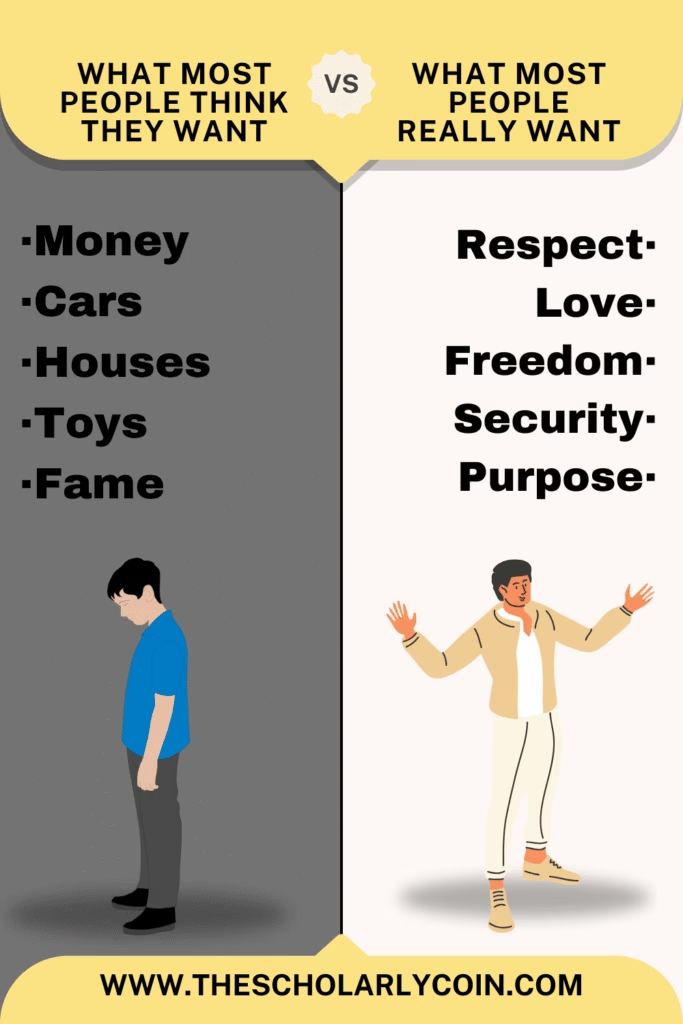
What most people think they want:
- Money
- Cars
- Houses
- Toys
- Fame
What most people actually want:
- Respect
- Love
- Freedom
- Security
- Purpose
Money can be a tool to earn you some of those wants, but it definitely won’t bring all of them by itself. Frugal living also doesn’t give you all of those things, but it’s a better guide to freedom, respect, security, love, and purpose than spending ever will be.
How to Live Frugally
Maybe you’re already convinced that frugality is needed, but you don’t know where to start or how to live frugally. That’s okay!
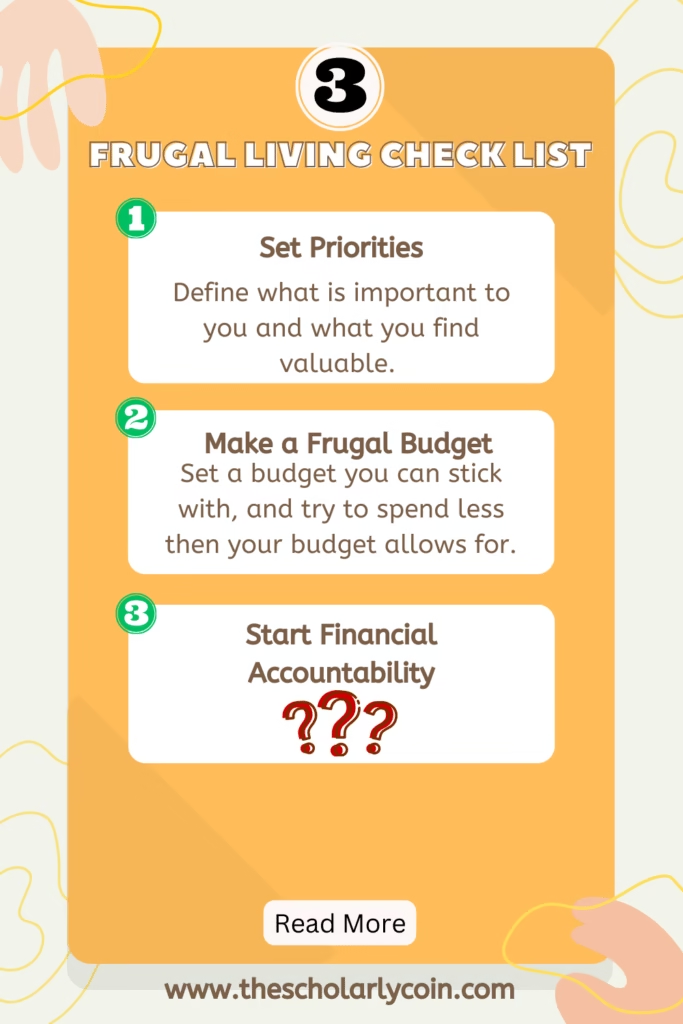
Frugal living is a simple process, but it takes dedication and self-discipline. That’s why I have broken it down into 3 simple steps to craft a frugal life. This is my 3-step approach to living a frugal life.
Frugal Living Step #1: Life Priorities
The first step in any process is finding out your priorities. No one can tell you what is important to you. Only you can decide. However, priorities should meet a specific criterion. Priorities should be long-term, personal, and relevant.
I can’t tell you what to prioritize, but I can give you a few examples and an exercise to help you through the process.
Examples of my priorities:
- Financial Freedom (I want to be able to move on from a job, a business deal, or anything knowing that I am financially secure).
- Physical Health (I want to be able to train like an athlete, eat well, and perform in sports).
- Loved Ones (I want to be able to spend time with friends and family, supporting them monetarily and emotionally).
- Faith (I want to be able to spend time in my faith worshipping my savior Jesus and growing in relationship).
These are a few examples of what priorities can look like. They don’t have to be financial, and they don’t have to be pretty or overly specific. However, they should be entirely personal and uninfluenced by the world outside.
Try this exercise:
- Write down a few words that are meaningful to you (justice, peace, financial freedom, relationships, etc.)
- Write “why?” above or beside each word.
- Write in two sentences or less why you want those words in your life.
- Keep them broad
This exercise helps you set your priorities straight without much thought. Keeping them broad allows you to determine if a purchasing decision will meet one of these words. Now let’s get to frugal budgeting.
Frugal Living Step #2: Frugal Budgeting
Once you have your priorities set it’s time to start a frugal budget. This doesn’t need to be complicated and it doesn’t change from most budgeting. You can use any budgeting method you’d like. I have an article that talks about the difference between reverse budgeting and forward budgeting.
Read the full article here: How to Budget as a Broke College Student: 3 Crucial Things
For this example, we are going to use a 50/30/20 budget. That means 50% goes to needs, 30% to wants, and 20% to investing/savings. If you’re wondering how this differs from different budgeting, don’t worry we are getting there.
Frugal budgeting differs because most budgets tell you how much to spend, but with a frugal budget your goal is to come under those two first percents. If you can reduce your needs expenses, and especially your wants expenses, you are on the right track for a frugal budget.
The reason we want to stay under the 50% and 30% is so that we can either save or invest the rest of the money. Pay for what you actually value and nothing more. Here are some ways to reduce your costs:
- Have roommates/rent out a room (housing savings)
- Meal prep and buy with coupons and discounts (food savings)
- Bike to work or take the bus (transportation savings)
- Change your phone plan (communications savings)
- Reduce streaming services (entertainment savings)
- And the list goes on
This is where your priorities come into play. If you value your own space then spend well in that area, but cut costs where you can. It’s all personal preference.
Frugal Living Step #3: Financial Accountability
Financial accountability is the idea that every person will fail their budget unless they have a way to track it and a reason to follow through with it.
If you’re the type of person to get excited, start a goal, then get off track, and throw the goal away, then you need a system for financial accountability. I use a spreadsheet to track my expenses, but you can use a computer software or mobile app. Tracking finances doesn’t have to be hard.
Something that tends to spice things up is adding a punishment to missing your goals. Remember if you were supposed to stay under that 50% and 30% then you need a real tangible reason to stay under that budget.
What works for me is texting a friend my goal and having them check in on me. If I don’t meet that goal, I might have to run 2 miles or buy that friend a gift. You could have them pour an ice bucket over you. It doesn’t really matter. We just want our brains to associate hitting our goals as good and missing them as bad.
Financial accountability keeps us going in the long run.
Frugal Living: Putting it All Together
Frugal living doesn’t have to be hard, and it doesn’t mean that you are cheap either. If you remember only one thing, it should be that frugal living isn’t for poor people, it’s for financially literate people.
Pay for the things you value and leave everything else for others.
If you got value out of this article it helps the website a lot if you share on social media or send to a friend. Feedback is always welcome as we continue to develop The Scholarly Coin.
Until the next article.
**Hi, I am your author Ryan Lisota, and I am on a journey to educate students of all ages. I am young, just like you and I have a goal to be on Forbes 30 before 30. Help me make that dream come true by reading another article here or subscribing to my newsletter here.**
Thank you!